The course covers the historical development of classic yoga from the 300s to the 1600s from the perspective of religious history, highlighting the sociocultural and religious background in South Asia and its influence on the different expressions of yoga. The fundamental classic definitions of yoga and its forms are presented. Religious, philosophical, and therapeutic aspects of classic yoga are covered and related to the tantric and non-tantric forms of yoga. Through an overview of the South Asian history of yoga, the course also contributes to critical reflection upon the use of history that characterises the contemporary transnational yoga movement.
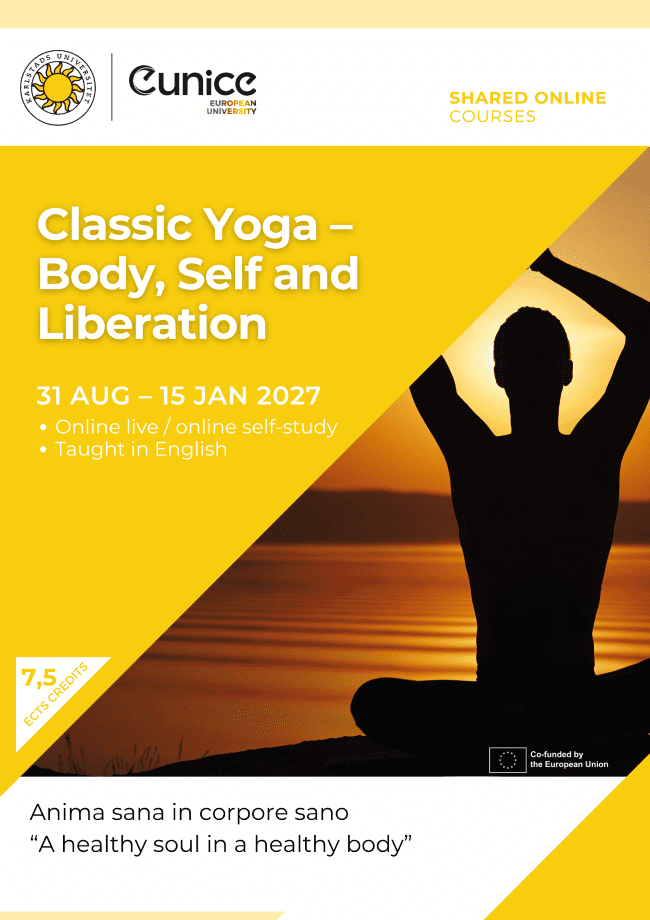
Classic Yoga – Body, Self and Liberation 26-27 S1
Upon completion of the course, students should be able to:
1. give an account of the historical, cultural, and religious contexts in which classic yoga emerged and developed in South Asia,
2. give an account of different classic definitions of yoga, its parts and main forms,
3. give an account of the philosophical, religious, and therapeutic foundations of classic yoga and its approach to the body,
4. identify the main ascetic and tantric trends of development in classic yoga, and
5. reflect upon the use of history in the contemporary transnational context of yoga.

Timetable:
One two-hours meeting every two weeks
B2 level of English.
Study Level: Bachelor
-
- Submit your application via the button ‘Apply Now’.
- Please keep in mind that the number of participants could be limited for each course. Application does not guarantee enrolment in the course.
- The course participants will be selected based on criteria specified in the study guide.
- Your home university will inform you whether you have been accepted and provide further information about the next steps.
Specific instructions in some universities:
- BTU students: a Learning Agreement must be completed in advance in coordination with your departmental advisor. Please contact your examination office and study programme coordinator in good time once you are accepted for the courses you would like to attend. For any other questions you can contact: eunice@b-tu.de
- UPHF students: make sure to ask the approval of your director of studies (responsable pédagogique) before applying. For any question, you can contact the EUNICE office: eunice@uphf.fr
- UoP students: questions about enrolment and recognition can be answered by your Director of Studies or ECTS Coordinator, or you can contact eunice@go.uop.gr
Any questions about enrolment or credit recognition? Contact your EUNICE course coordinator.
Apply Now
Anima sana in corpore sano / “A healthy soul in a healthy body”
Study Level
Bachelor
Bachelor
Applications deadline
1 August 2026
1 August 2026
Dates
31 August - 15 January, 2027
31 August - 15 January, 2027
One two-hours meeting every two weeks
Accreditation
7 ECTS
7 ECTS
Mode
Online live
Online live
