
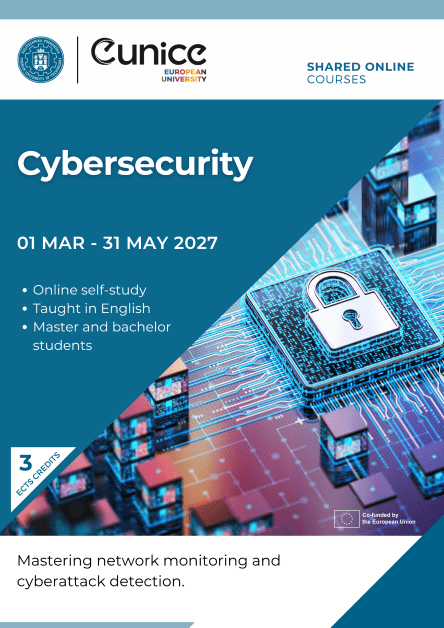
Cybersecurity 26-27 S2

The CYBERSECURITY course aims to provide students with knowledge of:

  • Techniques for monitoring network resources and detecting cyberattacks.
  • Common methods used by cybercriminals to compromise data, privacy, and IT systems.
  • Security mechanisms and vulnerabilities of Windows and Linux operating systems.
  • Security aspects of network infrastructure, protocols, and services.
  • Tools and techniques used to protect computer networks and information systems.
  • Best practices and methodologies applied in modern cybersecurity.

The course is composed by 10 units:

  1. Cybersecurity vulnerabilities, threats and risks.
  2. Cybersecurity and the Security Operation Centers.
  3. Security of Windows operating system.
  4. Security of Linux operating system.
  5. Security of network protocols and services.
  6. Security of network infrastructure.
  7. Methods for protecting a network.
  8. Cryptography and the public key infrastructure.
  9. Endpoint security and analysis.
  10. Security monitoring.

The course will consist of 15 hours of lectures, 15 hours of labs. Online-self study mode: all lectures will be available as recordings; students will have access to laboratory exercises online. It is recommended for students to spend 4 hours per week listening to recorded lectures and conducting laboratory exercises.

For a detailed description of the course, please refer to the course study guide above (it will open in a new tab).

Timetable:

The course will consist of 15 hours of lectures, 15 hours of labs. Online-self study mode: all lectures will be available as recordings; students will have access to laboratory exercises online. It is recommended for students to spend 4 hours per week listening to recorded lectures and conducting laboratory exercises.

  • EUNICE student: enrolled as a bachelor’s or master’s degree student in one of the universities of EUNICE European University consortium (check its universities here).
  • Fundamentals of Computer Networks
  • Basic knowledge of TCP / IP stack protocols, of the communication process between network devices and the basics of operating systems
  • English B2


Study Level: Bachelor, Master

  • Submit your application via the button ‘Apply Now’.
  • Please keep in mind that the number of participants could be limited for each course. Application does not guarantee enrolment in the course.
  • The course participants will be selected based on criteria specified in the study guide.
  • Your home university will inform you whether you have been accepted and provide further information about the next steps.

Specific instructions in some universities:

  • BTU students: a Learning Agreement must be completed in advance in coordination with your departmental advisor. Please contact your examination office and study programme coordinator in good time once you are accepted for the courses you would like to attend. For any other questions you can contact: eunice@b-tu.de
  • UPHF students: make sure to ask the approval of your director of studies (responsable pédagogique) before applying. For any question, you can contact the EUNICE office: eunice@uphf.fr
  • UoP students: questions about enrolment and recognition can be answered by your Director of Studies or ECTS Coordinator, or you can contact eunice@go.uop.gr

Any questions about enrolment or credit recognition? Contact your EUNICE courses coordinator.

Apply Now

Get familiarized with the techniques of monitoring network resources and detecting various types of cyber and network attacks.

Study Level
Bachelor, Master
Applications deadline
17 February 2027
Dates
1 March - 31 May, 2027

The course will consist of 15 hours of lectures, 15 hours of labs. Online-self study mode: all lectures will be available as recordings; students will have access to laboratory exercises online. It is recommended for students to spend 4 hours per week listening to recorded lectures and conducting laboratory exercises.

Accreditation
3 ECTS
Mode
Online self-study